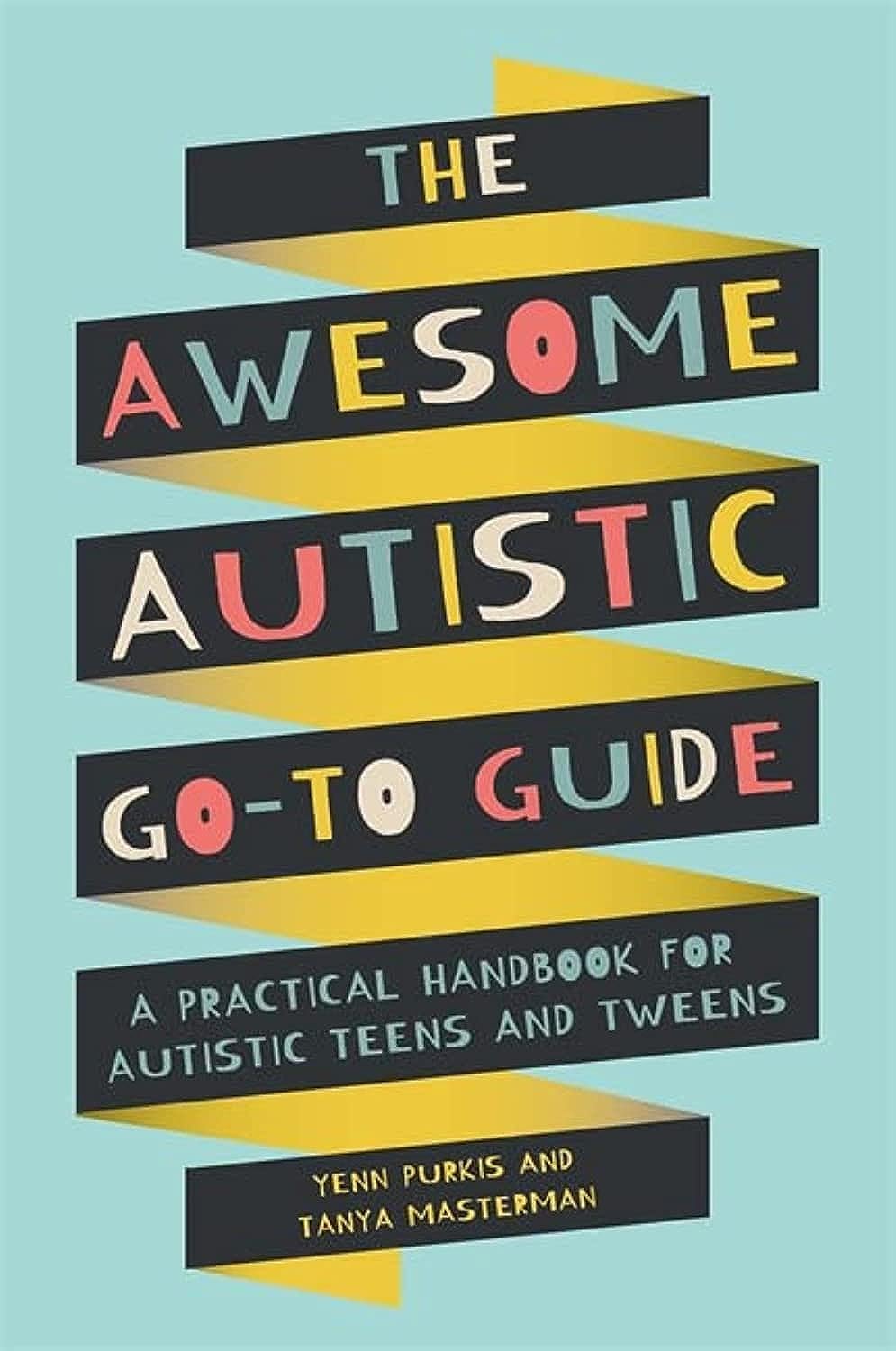

The Awesome Autistic Go-To Guide: A Practical Handbook for Autistic Teens and Tweens
By Yenn Purkis & Tanya Masterman, Illustrated by Glynn Masterman
YA, Non-Fiction, Self-Help
So far, all of the autism books I’ve reviewed here were for children or for parents of children. If you’ve been feeling left out as a teen or as a parent to one, today is your day!
The Awesome Autistic Go-To Guide is the first book I’ve found that’s written especially for teens on the spectrum. It’s definitely a much-needed category, and I hope more authors and publishers take a cue from this book.
This book is written simply and concisely which is perfect for its audience. It’s 108 pages long, and provides a fantastic 101-Style guide to autism that is perfect for the newly-diagnosed, or the tween/teen who is just starting to understand what their childhood diagnosis means for them, personally. In this guidebook, they will find chapters on common autistic traits, debunking autism myths, introducing famous autistic role models, and pointing out healthy portrayals of neurodivergent characters in movies and television. There are also journal prompts along the way to help readers personalize the information for themselves. For example, at the end of the chapter on special skills and abilities is a space for them to write down their own strengths and skills.

Positives:
- The authors are both autistic themselves.
- This book is not for babies. While it is written at a lower reading level, it is not childish or patronizing. It talks to teens like they are teens.
- It addresses topics that are important to teens, such as navigating social situations and relationships.
- The message of this book is empowering and encourages readers to be autonomous. For example, it encourages them to choose whether they prefer Person-First or Identity-First language for themselves.
- It validates the challenges autistic teens face, and gives them some coping and problem-solving ideas for sensory sensitivities, anxiety, and more.
Cautions:
- This book is written by British and Australian authors, which means some dialect differences for North American readers. (For example, they talk about “Maths Class” instead “Math Class.”) If your teen is very precise and accuracy-driven, they may become irritated or upset by these differences.
- I recommend parental guidance with this book. Reading it beforehand will give parents the opportunity to open conversations with their child about some of the more grown-up topics in this book. (Including bullying, body safety, and sexuality.) Since this book is shorter and more introductory, it introduces topics that may need more discussion and “flushing out” over time.
- The appropriate age range for this book will vary from person-to-person, according to the academic ability and emotional maturity of the reader. While some readers will be ready for this book at age 12, others may need to wait until later into their teen years.
Overall, I was very impressed by this book, and hope to see more like it in the future! Autism isn’t just a childhood issue. Autistic teens and adults deserve more resources tailored to their unique needs.
It is important to know that if someone picks on you for being different or for being autistic, the other person is the one who is wrong, not you.
The Awesome Autistic Go-To Guide by Purkis & Masterman
©Ashley Lilley – First time commenting? Please read my Comment Policy.
Discover more from Ashley Lilley
Subscribe to get the latest posts sent to your email.
 Ashley Lilley