
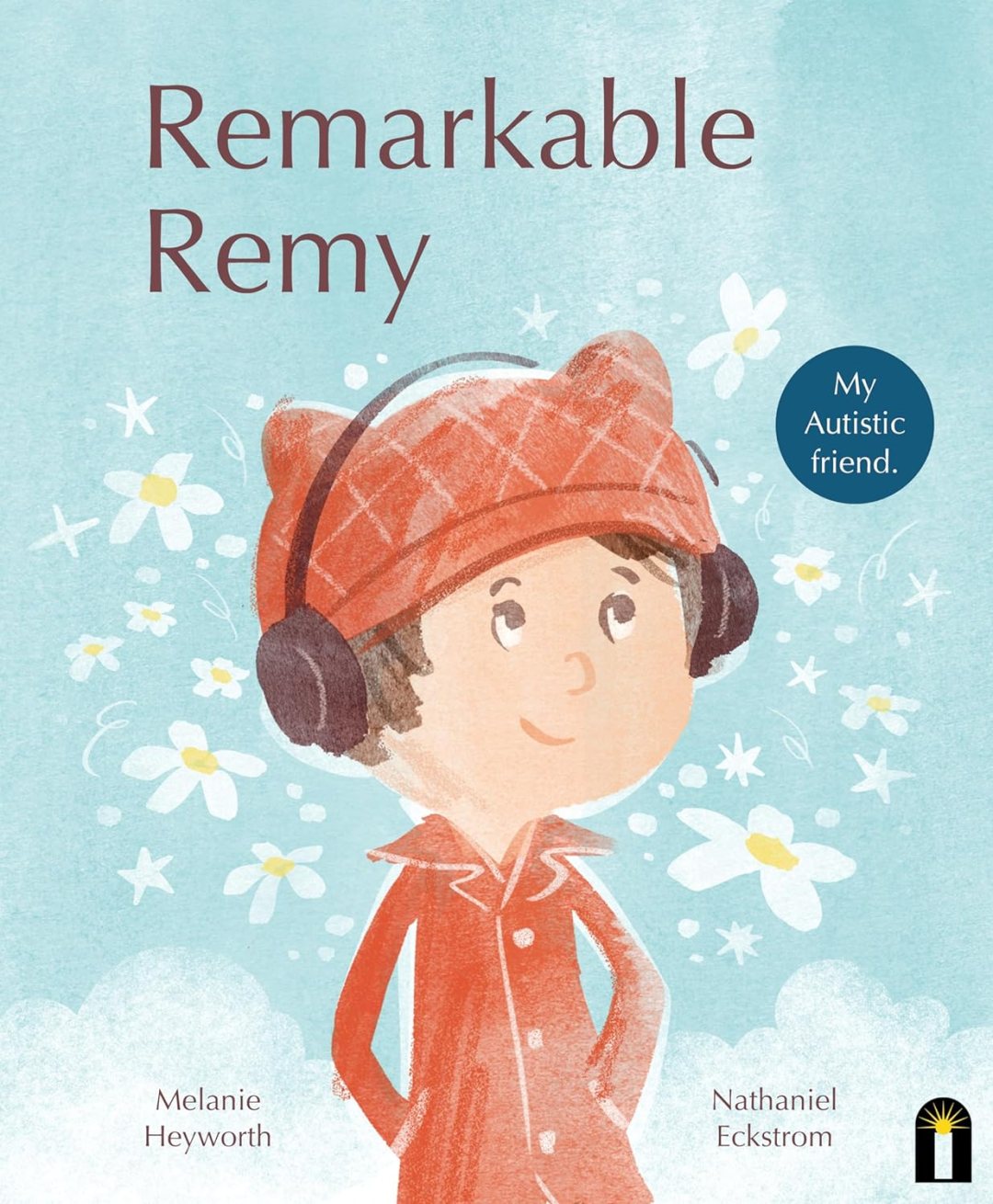
Remarkable Remy
By Melanie Heyworth, Illustrated By Nathaniel Eckstrom
Children’s Picture Book
Excuse me while I dry my eyes and let out an embarrassingly loud snort, because this book made me cry!
Remarkable Remy is the most beautiful children’s book about Autism acceptance that I have read to date. I’m just going to cut to the chase, and tell you right now that this book gets two enthusiastic thumbs up from me!
Remarkable Remy is a picture book for elementary aged children. I would place it around a Grade 4 reading level, because it includes several big words (including “remarkable”). But, I believe the meaning and heart of the story will come through just fine when it is read aloud to younger listeners.
This story is narrated by an unnamed girl, who tells readers all about her friend Remy. On every page, she tells everyone about something she has learned from Remy that makes her life more fantastic.
There are two refrains repeated throughout this story:
1. “When I… I know it is Remy who taught me…”, and
2. “I love Remy’s way, their Autistic way, of…”
Our narrator shares how Remy has taught her to be curious, creative, expressive, full of wonder, passionate, and accepting, as well as how to communicate when words fail, and how to be a loyal friend.
This book focuses on who Remy is, and doesn’t get into any explanations of Autism. As such, there is nothing that I need to fact-check or critique. My usual “credits and cautions” list is pretty small:
Credits (The Good Stuff):
- The author of this book is autistic herself.
- This book speaks about Autism in a positive and neuro-affirming way.
- This book uses identity-first language.
- The story and illustrations do a wonderful job of showing a wide range of Remy’s talents and interests, avoiding tired clichés.
- Remy is always referred to by their name, or by they/them pronouns, and this book avoids gender-specific stereotypes often seen in other autism books, making it very inclusive.
Cautions (Be Aware/The Bad Stuff):
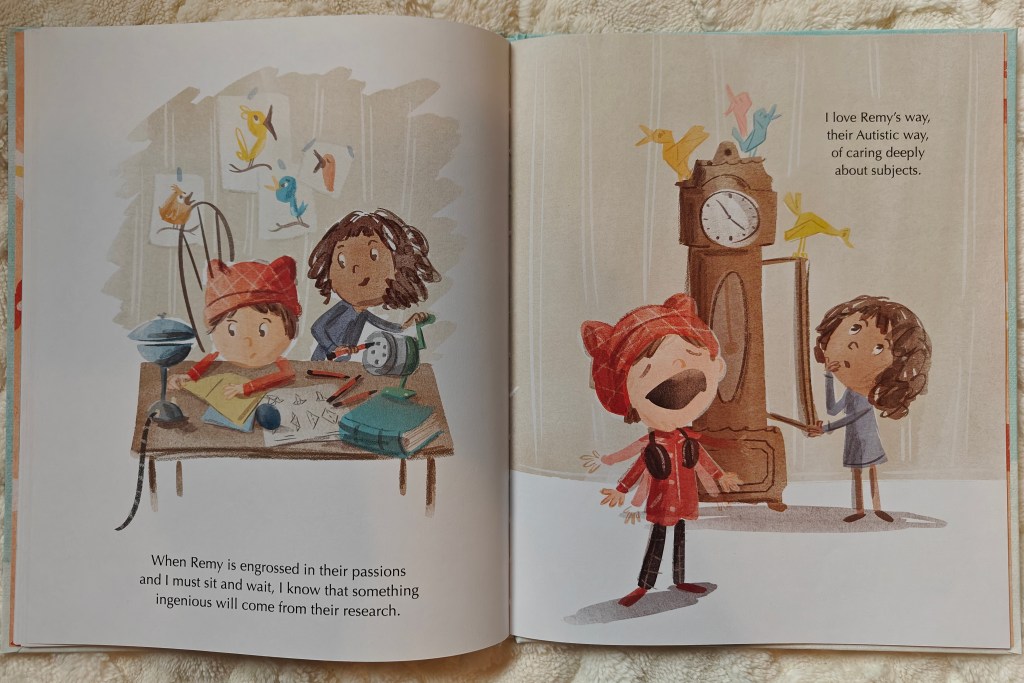
- Remy is almost always pictured with noise-cancelling headphones, and once (pictured above) Remy is seen flapping their arms. Some may consider this a stereotypical portrayal of Autism.
Conclusion:
This story is all about encouraging friendships between autistic and non-autistic kids, by celebrating the unique perspectives that many autistic people bring into their relationships. It could help non-autistic kids grow curious about their autistic peers, and it could help build self-esteem in autistic kids, by focusing on their abilities and passions, instead of their “deficits.” It is a wonderful change of pace from the many books that try to explain away all the “weird” parts of autism, and convince readers that it “isn’t so bad.”
I highly recommend sharing this book with your family or classroom!
©Ashley Lilley – First time commenting? Please read my Comment Policy.
Discover more from Ashley Lilley
Subscribe to get the latest posts sent to your email.
 Ashley Lilley