
All I can say is, “Wow!”
Today’s book review is rare, because I can’t think of a single critique. This post could simply be summed up as, “get this book.”

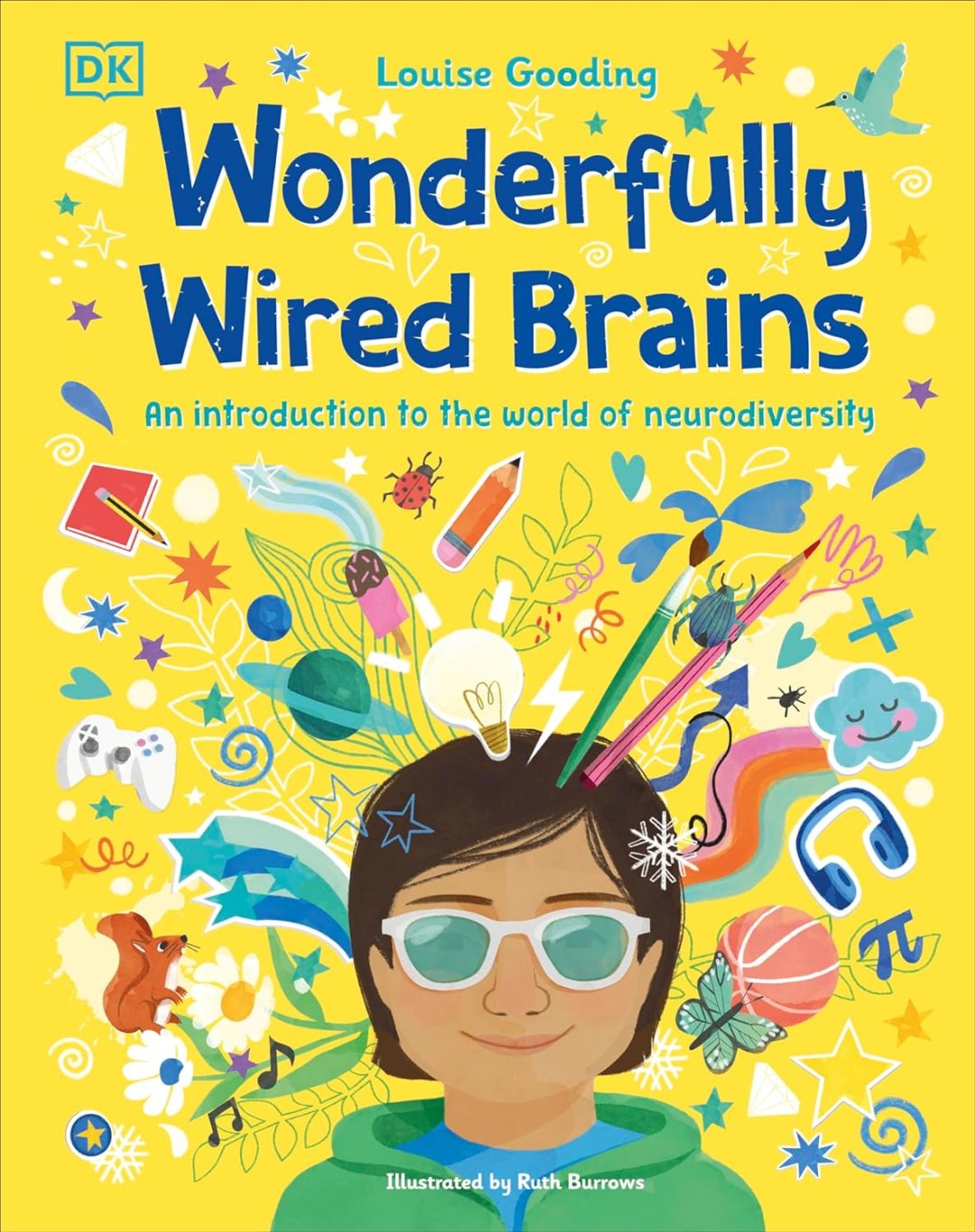
Wonderfully Wired Brains: An Introduction to the World of Neurodiversity
Written By: Louise Gooding
Illustrated By: Ruth Burrows
Children’s Non-Fiction, Science
Wonderfully Wired Brains is the kind of children’s book that adults could pick up and learn from. I certainly did.
This book starts at the very beginning. It explains what brains are, what they do, which parts of the brain control which functions, and talks about the roles that chemicals, hormones, and our fear responses play in influencing our brain’s decisions. It does an incredible job of explaining “Brain 101.”
But it doesn’t stop there.
The book then goes on to explain the concept of neurodiversity, that is, the idea that we all have unique, one-of-a-kind brains. And introduces the concept of neurotypical brains and neurodivergent brains, which are simply a set of guidelines created by healthcare professionals to identify people who have greater strengths or challenges than the average. This book is positive and neuro-affirming. It frames neurodivergent brains as different, not bad.
This book introduces several types of neurodivergence. These 1-4 page summaries give basic overviews of traits, strengths, and accommodations:
- Autism
- ADHD
- Dyspraxia
- Dyslexia
- Synesthesia
- Dyscalculia
- Dysgraphia
- Processing Disorders
- Sleep Disorders
- Anxiety
- Depression
- OCD
- Bipolar Disorder
- Tics/Tourette’s Syndrome
- Seizures/Epilepsy
- Cerebral Palsy
This book also includes information on:
- Language: how to respectfully refer to people who have neurodivergent brains
- Masking: how and why neurodivergent individuals try to hide their traits and blend in
- Brain Care: how to take care of your mental health
- History: the different ways unique brains have been studied and referred to in the past
- Historical Neurodivergents: short biographies of people from history who displayed neurodivergent traits
- Modern Neurodivergents: short biographies of people living today who are neurodivergent
And finally, this book ends with a call to action, encouraging readers to learn more about unique brains. It also directs them to the library, teachers, and safe trusted adults, if they suspect that they have a “wonderfully wired brain,” and need support.
Normally when I review a book, I create a list of my “Credits and Cautions,” that is, my version of a pro and con list. I like to point out what a book does well, and what it does poorly, and warn readers of any hurtful terminology. I have so few cautions about this book, that I have decided to forgo my usual list.
I will, however, point out that this book is not for very young children. For starters, it is written at too high of a reading level (I would estimate it at Grade 4+). This book also gently touches on some uncomfortable topics (such as neurodivergent people being poorly treated in the past) which may be too mature for the very young. It also introduces you to real people who have painful backstories, if a child were to google them (Harriet Tubman, for example).
This book is the best book about neurodiversity I have read to date. Not just the best children’s book. The best book. Period. I highly recommend it.
I think Wonderfully Wired Brains should be available in every library and school library, and I think that every family with a neurodivergent family member would benefit from a home copy too!
I think teachers should read it, so they are aware of the challenges some of their students may be facing, and so they are equipped to address brain differences with their students.
I think parents should read this book, so they are aware of the many types of neurodiversity that their children may show signs of.
And I think children should read it, as soon as they can, as it will help them makes sense of the differences they are already seeing and sensing in themselves and their peers.
Five Stars. 10/10. Thumbs Up. In my opinion, this book is definitely worth checking out.
©Ashley Lilley – First time commenting? Please read my Comment Policy.
Discover more from Ashley Lilley
Subscribe to get the latest posts sent to your email.
 Ashley Lilley
One thought on “Wonderfully Wired Brains”