
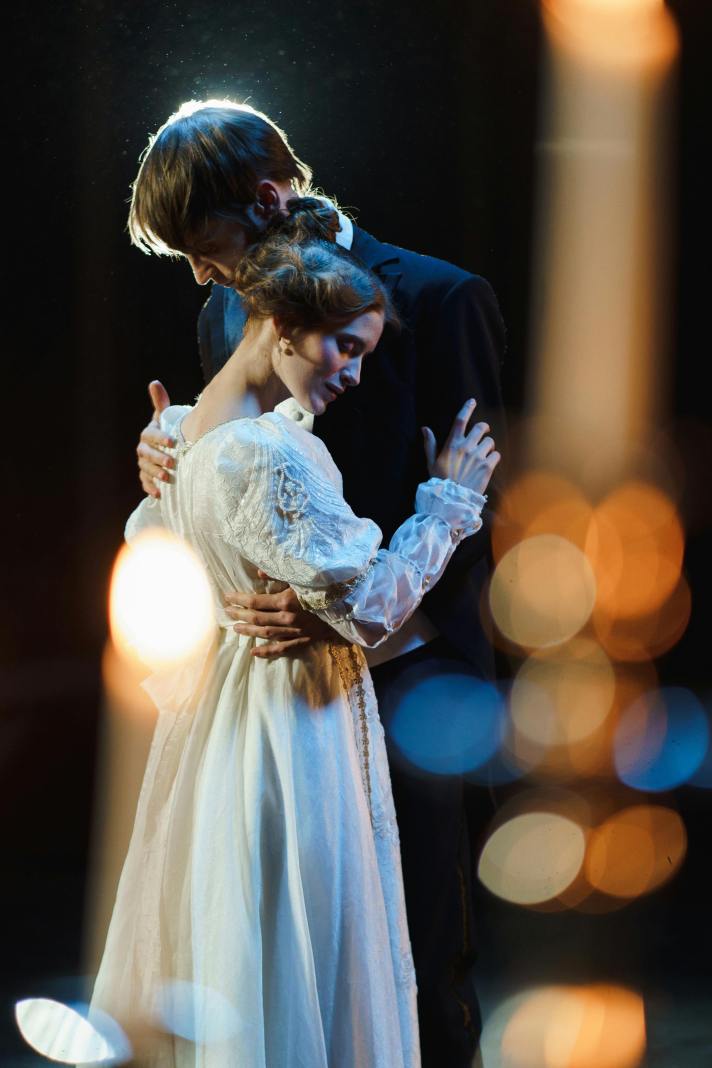
This week, I’m focusing on the other half of the Pride & Prejudice love duo: Elizabeth Bennet. Here’s why I think she is neurodivergent, and why her and Mr. Darcy make such a great match.
10 Signs that Elizabeth Bennet is Neurodivergent
Specifically, I think she has ADHD. Here are my observations:
#1. She is Highly Emotional
“Oh, my dear, dear aunt,” she rapturously cried, “what delight! What felicity! You give me fresh life and vigour.” -pg 162
She felt depressed beyond anything she had ever known before. -pg 217
“I am the happiest creature in the world. Perhaps other people have said so before, but not one with such justice. I am happier even than Jane; she only smiles. I laugh.” -pg 391
“How despicably I have acted! …How humiliating is this discovery!” -pg 216
Be it elation or despair, Elizabeth always wears her heart on her sleeve. Everybody has emotions, but emotional control is a skill that many ADHD-ers really need to work at.
#2. She is Playful, Fun, Energetic & Independent
…her manners were not those of the fashionable world, he was caught by their easy playfulness. -pg 27
…crossing field after field at a quick pace, jumping over stiles and springing over puddles with impatient activity. -pg 37
“It seems to me to show an abominable sort of conceited independence…” -pg 41
Elizabeth was not formed for ill-humour. -pg 98
If there was ever a word to describe many a soul with ADHD, it is “spirited.” Lizzie embodies optimism and a youthful playfulness that even her younger sisters do not. They are trying to grow up too fast; she is perfectly comfortable with who she is.
#3. She has a Flair for the Dramatic
She told the story, however, with great spirit among her friends; for she had a lively, playful disposition, which delighted in anything ridiculous. -pg 15
“Compliments always take you by surprise, and me never.” -pg 18
Lizzie can’t help but retell a story in great detail. She’s quick to tell a joke, or come back with a barb. She is an animated talker and storyteller who flourishes in the center of attention; traits she shares with many modern actors and actresses who have ADHD.
#4. She is a Verbal Processor
…having told all her griefs to Charlotte Lucas. -pg 98
Elizabeth is not only a big conversationalist in social settings, she also habitually “infodumps” everything she knows on the first confidant she can: often her sister Jane, or her best friend Charlotte. She’s the kind of person who might just explode if she cannot talk things out.
#5. She’s Very Blunt
“You have liked many a stupider person.” -pg 18
[Jane] “One does not not know what to think.”
[Elizabeth] “I beg your pardon; one knows exactly what to think.” -pg 93
“If I go on, I shall displease you by saying what I think of persons you esteem. Stop me whilst you can.” -pg 144
“Upon my word,” said her ladyship, “you give your opinion very decidedly…” -pg 174
Elizabeth is the kind of person who speaks her mind, and “calls it like it is.” She makes snap judgments, and she’s rarely shy about giving her opinion, which could point to difficulties with inhibitory control.
#6. She Interrupts/Speaks Over Others
“And so ended his affection,” said Elizabeth impatiently. -pg 50
Of course, anyone can interrupt or talk over others sometimes, but ADHD-ers seem to do it much more frequently. This is due again to inhibitory control, which causes a lack of patience. If you know someone who is always finishing other people’s sentences, or becoming impatient when others take too long to tell a story (even though they themselves love to embellish their own stories!), there’s a good chance they have ADHD wiring.
#7. She Has Justice Sensitivity
“Nay, said Elizabeth, “this is not fair… The more I see of the world, the more am I dissatisfied with it; and every day confirms my belief of the inconsistency of all human characters, and of the little dependence that can be placed on the appearance of merit or sense.” -pg 143
Many ADHD and autistic individuals have a strong sense of justice. There is right, there is wrong, and you will not persuade them otherwise! This can sometimes cause unnecessary hurt feelings, but it can also cause incredible empathy. Neurodivergent people make excellent advocates. You definitely want them in your corner when you have a battle to fight!
#8. She is Strong-Willed
“I do not pretend to possess equal frankness with your ladyship. You may ask questions which I shall not choose to answer.” -pg 362
Cantankerous Lady Catherine meets her match in Lizzie! While most others cower in Catherine’s presence, Elizabeth stands firm and refuses to be bullied when she knows she is in the right. This is related to justice sensitivity.
#9. She has RSD
Elizabeth could not help observing… Mr. Darcy’s eyes were fixed upon her. …She could only imagine… that she drew his notice because there was something more wrong and reprehensible, according to his ideas of right, than in any other person present. – pg 57
“She had better have stayed at home,” cried Elizabeth… “Assistance is impossible; condolence insufferable. Let them triumph over us at a distance, and be satisfied.” -pg 300
RSD stands for “Rejection Sensitivity Dysphoria.” Many neurodivegent individuals are keenly aware of rejection, due in no small part to the fact that they are often rejected and bullied for being different. Individuals with RSD often don’t like being observed too closely, can become embarrassed quickly, don’t like to fail, and can sometimes hurt their own feelings by assuming someone is rejecting them/doesn’t like them, even if that is not the case.
#10. And Finally: She Falls in Love with Mr. Darcy
She began now to comprehend that he was exactly the man who, in disposition and talents, would most suit her. His understanding and temper, though unlike her own, would have answered all her wishes. It was a union that must have been to the advantage of both; by her ease and liveliness, his mind might have been softened, his manners improved; and from his judgement, information, and knowledge of the world, she must have received benefit of greater importance. -pg 319
As I said last week, neurodivergent couples often find their way to each other. Elizabeth comes to realize that herself and Darcy, though different at first glance, have so much to offer each other. Where one struggles, the other flourishes. Together they make a very complimentary couple.
She also comes to realize that their differences are truly not so vast. She has always been a little out of place in society because she is too loud and too spirited; he has always been a little out of place because he is too quiet and too reserved. At their core, they both share a desire to belong and be loved for exactly who they are.
Darcy and Lizzie adore each other–despite the “flaws” that others see in them–and together they make their home a safe and comfortable place for themselves.
…she looked forward with delight to the time when they should be removed from society, so little pleasing to either, to all the comfort of their family party at Pemberley. -pg 393
I’m not crying, you’re crying! ❤
Conclusion
I personally believe that Elizabeth has ADHD. If I had to guess, I would say she is Type C (combined presentation). She mostly shows Type-HI characteristics: her energy, playfulness, talkativeness, etc… but she also shows some Type-I characteristics: the justice sensitivity, the severity of her RSD, and her tendency to be very critical of herself.
After re-reading Pride & Prejudice with the knowledge I have now about neurodiversity, I couldn’t help seeing neurodivergent characters everywhere! Mr. Bennet, Mrs. Bennet, all the siblings… Mr. Collins! So many characters with hereditary neurodivergent traits. A book like this is a wonderful example of how neurodiversity runs in families, and how it is not “bad.” What would our world be without all of the delight and humour people like the Bennets bring? And how would we survive without the care, attention, responsibility, and honour displayed by the Darcy siblings and people like them?
I hope you’re enjoying my analysis of fictional characters. My goal is to make these posts one part fun, and one part educational, because seeing neurodivergent traits in a favourite fictional character can make them less intimidating, and can make them make sense in a way that a checklist can’t.
If you missed it, don’t forget to check out last week’s post about Mr. Darcy.
©Ashley Lilley – First time commenting? Please read my Comment Policy.
Discover more from Ashley Lilley
Subscribe to get the latest posts sent to your email.
 Ashley Lilley
Thanks for another good read Ashley.
You know and I know and I know that you know, that the closest I’ll ever get to reading those books is reading your take on them. lol Thanks! (“>”)
LikeLike
Haha, you’re very welcome.
LikeLike